
Media Reports
13 Media Reports articles from Weiershun: company updates, product applications and industry insights. Browse the full section.
The British government launches the "White House Plan" to slow global warming
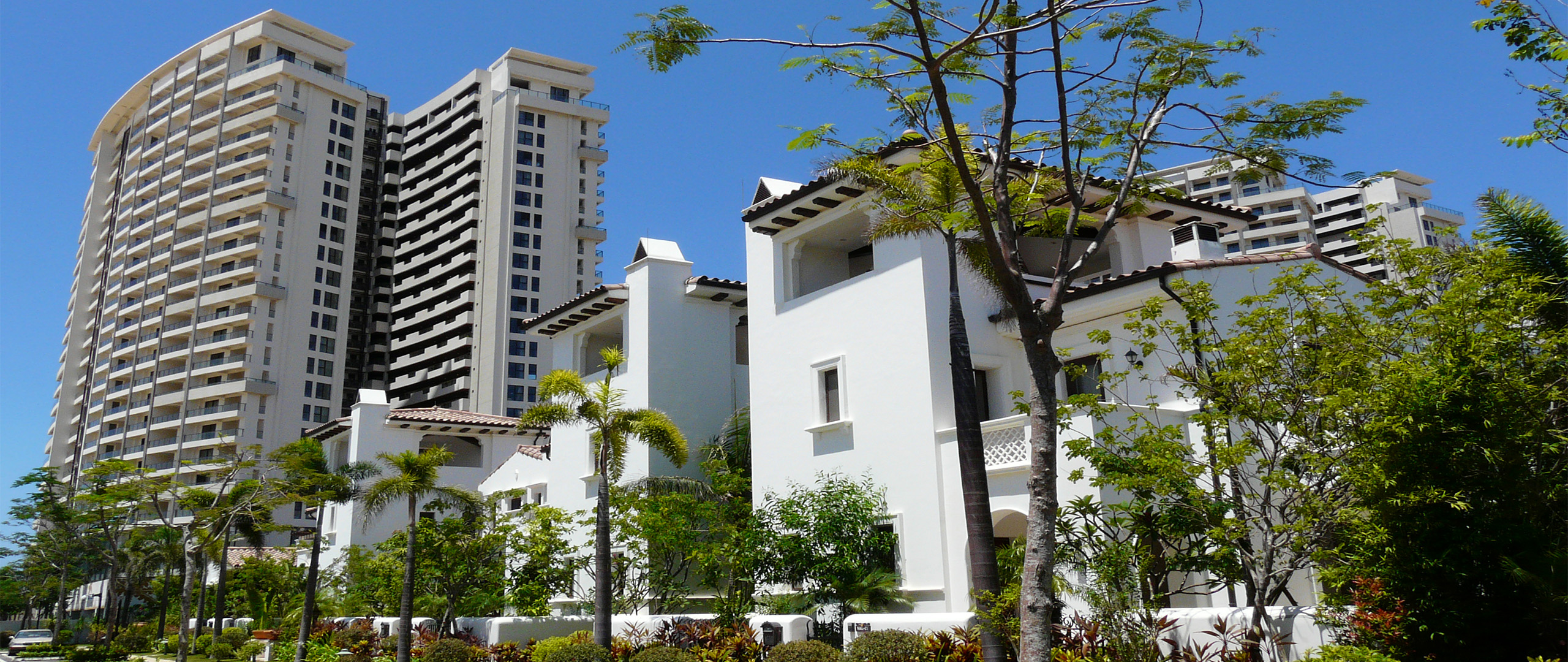
In March, the British "Guardian" reported a campaign called "Whitewash the Earth", which advocated the use of white paint as much as possible and whitewash buildings to slow global warming. Currently, many cities in the United States have announced their participation in this plan. Movement advocate Hasham. Akbari recently accepted an interview with "The Bund Pictorial": "Every ten square meters of the city's surface changes from dark to light, which has the same cooling effect as preventing one ton of carbon dioxide emissions", and proposed that Beijing and Shanghai participate in this An Environmental Campaign for Whitewashing Buildings / Zhou Yan, Jin Huiyu (Internship) Andalusia, the largest autonomous region in southern Spain, is famous for its white mountain city. All the buildings in the mountain city are painted white because the white color can reflect the heat of sunlight and keep the interior cool. In fact, this Mediterranean "cooling secret" has been widely used in ancient Greece. Today, people can still see ancient villages whitewashed with lime from many hills in Central and Southern Europe and North Africa. American scientist Hashim. Dr. Hashem Akbari is also a beneficiary of this "cooling secret". Akbari grew up in a small town in Tehran, Iran, surrounded by bungalows with white roofs that are warm in winter and cool in summer. He was inspired by it and went to Lawrence, California. Berkeley National Laboratory studied the feasibility of adjusting the temperature in this way, and finally put forward the idea of "whitening the earth": He suggested replacing the dark materials covering roads and roofs with more reflective materials to make the city look like a mirror. Reflect sunlight. Recently, he also initiated this campaign to the world by accepting interviews with major media around the world. The White House Project of "Three Kills with One Strike" Lawrence where Akbar is located. Berkeley National Laboratory is one of the most authoritative national laboratories in the United States. The current Secretary of Energy Zhu Diwen was the director of the laboratory before he took office. Akbari and his research team are committed to the "urban heat island effect" (a phenomenon in which the temperature in the city is significantly higher than that in the outer suburbs-Editor's Note) research, and he is an expert in building energy utilization and community cooling technology. "The principle of'whitening the earth' is very simple," Akbari explained, replacing the dark materials covering urban roads and roofs with light-colored materials with high albedo and strong reflectivity. Generally speaking, dark roofs are about It reflects 10-20% of sunlight, and light-colored ones can reflect at least 50%. "The average roof area of a U.S. home is about 1,000 square feet. If a white material is used to replace the dark roof or the dark roof of a roof, it can offset the 10 tons released into the atmosphere and warm the earth. carbon dioxide." "I call this sport'three kills with one stone'." Akbari used computer simulations to show that in Los Angeles, using light-colored reflective surfaces to cover about 2/3 of the road and roof, and planting more trees, The temperature in the city is reduced by 2 to 3 degrees Celsius, and a large amount of smoke in the city is reduced. The effect is equivalent to a total ban on cars and trucks. Cooler roofs can also save electricity bills, and the exercise is not difficult to perform. Akbari told reporters that the "whitewashing of the earth" plan is more feasible than other geoengineering plans. As early as 2005, the "Interim Regulations on Building Standards" implemented by California, the United States, required the roofs of commercial buildings to be painted white. Now this regulation has been extended to the roofs of other buildings, which laid some foundation for Akbari's plan. basis. Including Houston, Chicago and Salt Lake City, many cities in the United States have joined his plan, and he is also in discussions in other cities. Akbari’s ultimate goal is to start from the major cities in the United States and extend to 100 cities in the tropical and temperate regions of the world, using materials with an albedo of not less than 60% to build roofs and pave roads. Fighting for a "breathing opportunity" for the earth Now, Akbari's plan has expanded from the United States to the world. In September last year, Akbari gave a speech at the California Climate Change Research Conference. At that time, his idea was to persuade the United Nations to organize major cities to rebuild roofs and resurface roads. Today, he proudly told reporters that expanding the influence of the campaign through the United Nations is not the only way. Earlier this year, the Brazilian "One Degree Less" project under the US Green Building Council, the Clinton Foundation, and former US Vice President Al. Gore's environmental protection team, after learning of his plan, have already offered cooperation intentions. Akbari said that these organizations will help him solve the funding problem of "whitening the earth" and will also help include the movement into the "Carbon Offset" plan. “Every ten square meters of the city’s surface changes from dark to light, which has the same cooling effect as preventing the emission of one ton of carbon dioxide. According to the current carbon trading price level, one ton of carbon dioxide is worth $25.” According to Akbari Once the “carbon offset” plan accepts his plan, the cost of whitewashing and transforming the world can be reduced to zero, and even become a profitable project. "According to the current ‘carbon trading’ price, the value of the ‘cool roofs and roads’ is 1.1 trillion US dollars.” With the "whitening of the earth" in full swing, its limitations have been exposed. Some scientists questioned the "complete whitening" of the world: first, "whitening the earth" only has an effect on areas with a lot of sunshine and high temperatures. obvious. In addition, they think that looking down from a high altitude, the white-painted world will make people dizzy, and that too light colors and too much reflected light will irritate people's eyes. "For areas with sparse sunlight, regardless of whether the buildings in the area require air conditioning or not, the white roofs can more or less reflect some of the sunlight that would otherwise enter the room, thereby helping to cool the world." Facing doubt, Ah Kebari said that he suggested strengthening the transformation of sunny countries. Regarding the problem of “dizziness”, Akbari also proposed a solution: the reflective material does not need to be all white, and light colors such as gray are also good. And besides using light-colored paint, there are other ways to increase the albedo of the material. Pigments that reflect infrared light can increase the reflectivity of dark surfaces by 40% without any noticeable change in color. Although their effect is not as good as white, they are much stronger than traditional materials. In the interview, Akbari said frankly that the essence of "whitening the earth" is only to delay climate warming on the surface, but the continuous emission of greenhouse gases and easily absorbable particles is the real cause of global warming, so lower the temperature of urban landmarks It cannot fundamentally curb climate warming. Akbari told reporters, “Now, when we cannot completely overcome the problem of global warming,'whitewashing the earth' at least buys the earth a breath of time.” In the interview, Akbari also warmly invited China's Shanghai, Beijing and other big cities to participate in the "whitewash the earth" movement. He told reporters that although his main job is to persuade more US cities to join the sport, he also has high hopes for large cities in developing countries. "Developing countries are currently rapidly expanding their infrastructure construction. This is the best time to add strong albedo materials to roof and road construction. Similarly, it is not difficult for Shanghai to repeat the California model."
British government chief scientific adviser warns of global warming, China suffers
British Government Chief Scientific Advisor Guangzhou Warning Express News (Reporter Liu Zhengxu) Yesterday, John Beddington, the chief scientific adviser of the British government, said in an interview with reporters in Guangzhou that global temperature changes have become the world’s most severe environmental challenge. If the global temperature rises by 2 degrees Celsius, there will be One billion to two billion people face a water crisis "If carbon emissions are not reduced, in 20 years, 40% of Bangladesh's land will be submerged." Beddington said that at present, the concentration of carbon dioxide in the atmosphere is still increasing, and global climate change has become a must for all countries. The most pressing environmental issue. He said that in 2007 and 2008, the thickness of Arctic summer sea ice reached the lowest point in history. According to this calculation, by 2030, there will be no ice remaining in the Arctic summer. Beddington believes that rising temperatures will directly lead to world food production crises and water crises. Global temperatures will rise by more than 2 degrees Celsius, and global food production will face the risk of reduced production. One billion to two billion people will face a crisis of water scarcity. China will It is the biggest victim of rising temperatures. "This year, a large-scale drought has occurred in the wheat-producing areas in northern China. This can be said to be one of the signs." He analyzed that China will rise faster than the global temperature. If the world does not take measures, regardless of carbon dioxide and other greenhouse gas emissions, The temperature in China will rise by 2 degrees Celsius by 2050, and by 4 degrees Celsius by the end of this century. The main rivers will be severely cut off. By the end of this century, 1 billion people will face a water crisis. The three major deltas of the Tang Dynasty will also face the risk of some areas being submerged. Author: Express News (Copyright, without permission, shall not be reproduced)
Promote wall material innovation and promote energy-efficient buildings
According to the website of the National Development and Reform Commission, on the morning of September 27, the National Development and Reform Commission, the Ministry of Land and Resources, the Ministry of Construction, and the Ministry of Agriculture jointly convened a nationwide video and telephone conference on promoting wall material innovation and the promotion of energy-saving buildings. The “Notice on Further Promoting the Innovation of Wall Materials and the Promotion of Energy-Saving Buildings” (State Council issued [2005] No. 33) spirit has been fully deployed. Premier Wen Jiabao emphasized at the national video and telephone conference on building a conservation-minded society that it is necessary to strictly limit the destruction of fields and burn bricks, vigorously promote the innovation of wall materials, and encourage the development of energy-saving buildings. A few days ago, the General Office of the State Council issued a notice requesting further promotion of wall material innovation and promotion of energy-saving buildings. It is proposed that by the end of 2010, all cities will ban the use of solid clay bricks, the national annual output of solid clay bricks will be controlled below 400 billion, the output of new wall materials will account for more than 55% of the total wall materials, and the proportion of construction applications will reach 65. % Above, and the standard of energy saving rate of 65% should be implemented in severe cold and cold areas. In order to implement the spirit of Document No. 33 issued by the State Council, the four ministries and commissions proposed the following main measures. The first is to increase the intensity of "prohibition" and accelerate the promotion of new wall materials. Relevant departments will be included in the second batch of "banned" cities, and these cities must complete the task of banning the use of solid clay bricks before the end of 2008. Continue to increase the rectification and standardization of brick kiln productivity, strictly control the scale of brick kiln land, and reduce the amount of land used. It is forbidden to build or expand solid clay brick production lines. Existing solid clay brick equipment must not be transferred to other places, and solid clay brick enterprises must be converted into production in a planned way. New buildings must strictly implement the design standards for building energy efficiency, and use new wall materials to the greatest extent. Office buildings for administrative agencies, public buildings, affordable housing, demonstration building communities, and state-invested production projects that are financially allocated or subsidized. It is necessary to select and purchase high-quality new wall materials, continuously expand the scope of application, and increase the proportion of applications. The second is to improve regulations and standards, and improve policies and measures. The four ministries and commissions will speed up the study and formulation of the promotion of wall material innovation and building energy conservation management regulations, and improve relevant technical standards. The administrative departments of wall materials in all regions are required to formulate relevant laws and regulations or implementation rules in light of the actual situation in the region. Make good use of existing policies, implement and improve the state's tax incentives to encourage the development of new wall materials, and tax policies to curb the production of clay bricks. Research and improve special fund policies for new wall materials, and explore tax and price policies that restrict the use of clay resources and promote resource conservation under the new situation. The third is to accelerate technological development and advance technological progress. Focus on organizing the development of high-performance energy-saving and heat-preserving new wall materials, as well as technologies, processes and equipment for producing new wall materials using a large amount of solid waste. According to the technological development, timely adjust and promulgate the encouraged, restricted and eliminated wall material technology, technology and equipment catalog. Organize demonstration production lines of new wall materials and pilot projects for energy-saving buildings, and accelerate the demonstration and promotion of green buildings, low-energy or ultra-low-energy buildings. The fourth is to strengthen organization and leadership and strengthen supervision and management. The four ministries and commissions require all localities to strengthen the organization and leadership of wall material innovation and the promotion of energy-saving buildings, implement management institutions and personnel, and establish a target management responsibility system. Strictly check land use, continue to strengthen law enforcement inspections, and further strengthen the supervision of township wall material manufacturers. Next year, the four ministries and commissions will jointly organize an inspection team to supervise and inspect the implementation of the document No. 33 issued by the State Council and to further promote the "ban on reality" work. The fifth is to strengthen publicity and guidance to create a good social atmosphere. Carry out various forms of publicity activities, promote advanced models, expose the phenomena of destroying fields and burning bricks, wasting resources, and destroying the environment, and give full play to the guiding and supervisory role of public opinion. At the meeting, Beijing introduced the total ban on the production of clay bricks and the first implementation of the 65% building energy-saving design standard in the country. Zhejiang Province introduced the ban on the use of solid clay bricks in gradient advancement. Jiangxi Province introduced the introduction of the "Promoting the Development of New Wall Materials" Regulations, the experience of advancing wall material innovation in accordance with the law. Article source: China Economic Information Network (All rights reserved, no reprint without permission)